

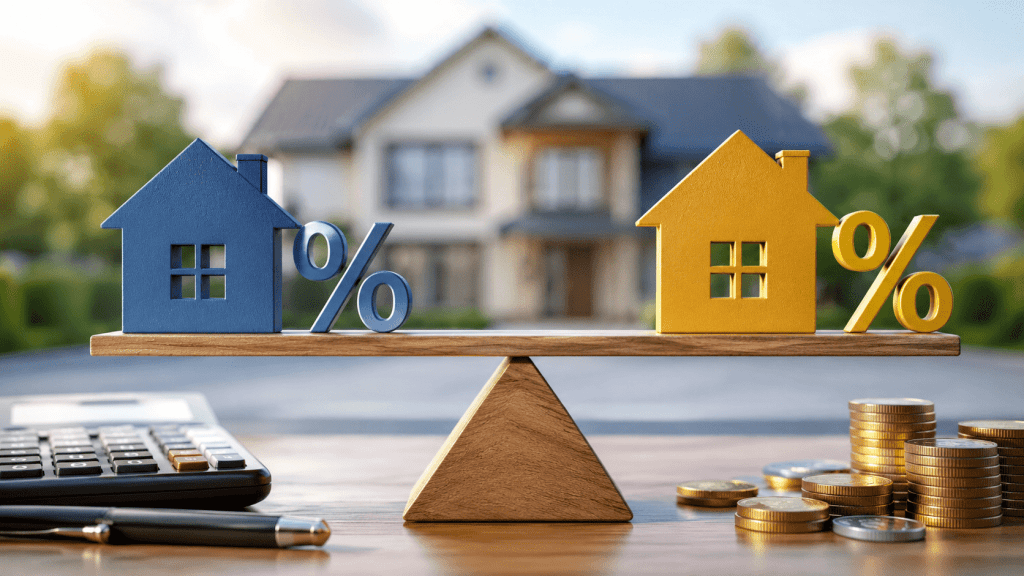
Choosing between a fixed or variable mortgage in 2026 is one of the biggest financial decisions for Canadian homebuyers and homeowners renewing their mortgage. With interest rates stabilizing after years of volatility, many borrowers are asking the same question: should you lock in a fixed rate for security, or choose a variable rate and potentially save money?
The answer depends on your financial goals, risk tolerance, and expectations for the economy in 2026.
Understanding Fixed and Variable Mortgages
What Is a Fixed-Rate Mortgage?
A fixed-rate mortgage keeps the same interest rate throughout your mortgage term. Your monthly payment stays predictable, making budgeting easier.
Benefits of Fixed Mortgages
- Stable monthly payments
- Protection from future interest rate hikes
- Easier financial planning
- Ideal for families with tight budgets
Drawbacks of Fixed Mortgages
- Usually slightly higher rates initially
- Higher penalties if you break the mortgage early
- Less flexibility during refinancing
Fixed mortgages are popular among buyers who value certainty and peace of mind.
What Is a Variable-Rate Mortgage?
A variable mortgage has an interest rate that changes with the lender’s prime rate, which is influenced by the Bank of Canada’s overnight rate.
Benefits of Variable Mortgages
- Often lower starting rates
- Potential savings if rates decline
- Lower penalties for breaking the mortgage
- Greater flexibility
Drawbacks of Variable Mortgages
- Monthly payments may fluctuate
- Harder to budget during uncertain markets
- Higher financial risk if rates rise
Historically, variable mortgages have outperformed fixed rates over long periods, but they can create stress during volatile markets.
Mortgage Rate Trends in Canada for 2026
The Canadian mortgage market in 2026 looks very different compared to the aggressive rate hikes of 2022 and 2023. The Bank of Canada has largely stabilized rates after multiple cuts through 2024 and 2025.
Current market observations include:
- 5-year fixed rates generally range around 3.7%–4.5%
- Variable rates are slightly lower in many cases
- Economists expect slower and more cautious rate movements
- Inflation remains a major factor affecting future mortgage pricing
Several mortgage analysts note that the spread between fixed and variable rates is narrower in 2026, making the decision more about personal comfort than dramatic savings.
Fixed vs Variable Mortgage Comparison
| Feature | Fixed Mortgage | Variable Mortgage |
|---|---|---|
| Payment Stability | High | Medium to Low |
| Risk Level | Lower | Higher |
| Flexibility | Moderate | High |
| Penalties | Usually Higher | Usually Lower |
| Best During Falling Rates | No | Yes |
| Best During Rising Rates | Yes | No |
| Budget Predictability | Excellent | Less Predictable |
Who Should Choose a Fixed Mortgage in 2026?
A fixed mortgage may be the better option if:
- You prefer predictable monthly expenses
- You’re already stretched financially
- Rising rates would significantly impact your budget
- You want peace of mind during uncertain economic conditions
- You plan to stay in your home long term
Many experts believe fixed rates remain attractive for buyers prioritizing stability over maximum savings potential.
Who Should Choose a Variable Mortgage in 2026?
A variable mortgage could work better if:
- You can comfortably handle payment fluctuations
- You expect rates to remain stable or decrease
- You want lower penalties and more flexibility
- You plan to sell or refinance within a few years
- You have strong cash flow management
Variable mortgages are especially appealing to financially flexible borrowers who can tolerate market uncertainty.
Important Factors to Consider Before Choosing
1. Your Risk Tolerance
This is often more important than rate predictions. Some homeowners are comfortable with changing payments, while others prefer certainty even if it costs slightly more.
2. Your Monthly Budget
If your budget is tight, a fixed mortgage may help protect you from payment shock.
3. Future Plans
Planning to move or refinance soon? Variable mortgages usually come with lower penalties.
4. Market Expectations
If rates continue declining, variable borrowers could save money. If inflation rises again, fixed-rate holders may benefit from locking in early.
Hybrid Mortgage Strategy: A Growing Trend in 2026
Some Canadian homeowners are splitting their mortgage into both fixed and variable portions.
Example:
- 50% fixed for stability
- 50% variable for potential savings
This “hybrid mortgage” approach reduces risk while still allowing borrowers to benefit if rates fall further.
Final Verdict: Fixed or Variable Mortgage in 2026?
There is no universal winner in the fixed vs variable mortgage debate.
- Choose fixed if stability, predictable payments, and lower stress matter most.
- Choose variable if flexibility and long-term savings potential are your priority.
For many Canadians in 2026, the decision comes down to financial comfort rather than chasing the absolute lowest rate.
Before signing any mortgage agreement, compare multiple lenders, review penalty terms carefully, and speak with a licensed mortgage professional about your specific situation.