

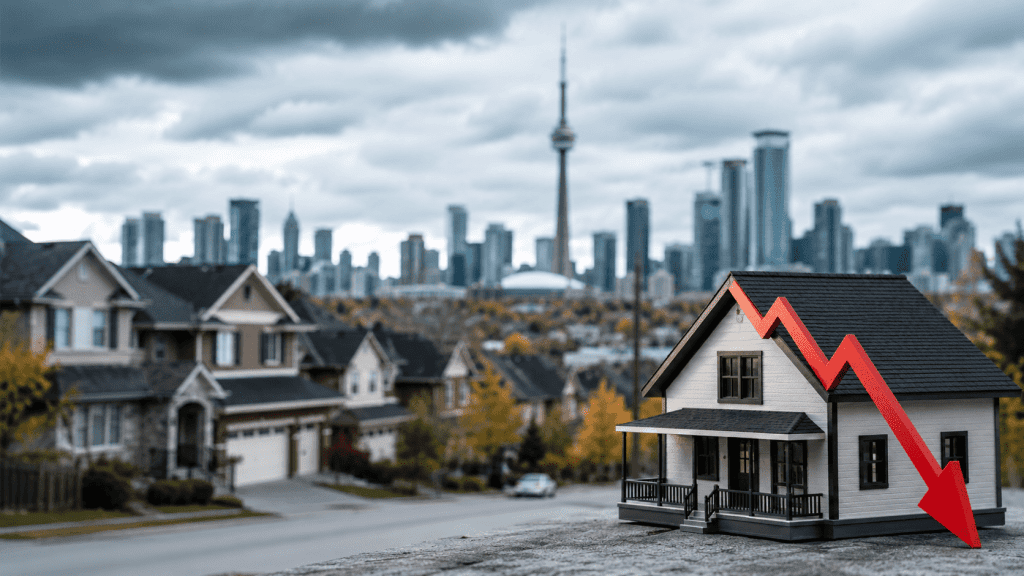
Canada’s housing market has entered a slower phase in 2026, with home sales remaining below historical averages across many major cities. While demand for housing still exists, a combination of affordability challenges, economic uncertainty, and higher borrowing costs is causing many buyers to delay purchasing decisions. According to housing experts and market forecasts, the slowdown is not necessarily a market crash — instead, it reflects a cautious and fragile market environment.
Rising Mortgage Rates Are Hurting Affordability
One of the biggest reasons behind slowing home sales is the rise in mortgage rates. Although the Bank of Canada lowered interest rates in previous months, fixed mortgage rates increased again in early 2026 because of rising bond yields and inflation concerns. This has made monthly mortgage payments more expensive for buyers.
For many first-time buyers, qualifying for a mortgage has become increasingly difficult. Even small increases in interest rates significantly impact purchasing power in expensive markets like Toronto and Vancouver. As a result, many Canadians are choosing to wait rather than buy immediately.
High Home Prices Continue to Pressure Buyers
Despite slower sales activity, home prices in many Canadian markets remain elevated compared to income levels. Affordability remains one of the biggest barriers preventing buyers from entering the market. CMHC reports that price-to-income ratios and carrying costs are still historically high in several provinces.
Although some cities have experienced moderate price declines since their 2022 peaks, prices are still too high for many households. Buyers are becoming more selective and cautious, especially in markets where monthly ownership costs remain far above rental costs.
Economic Uncertainty Is Reducing Consumer Confidence
Economic uncertainty is another major factor slowing housing activity. Canadians are increasingly concerned about inflation, employment stability, and the broader economy. Trade tensions, global geopolitical risks, and fears of slower economic growth are making households more cautious with large financial decisions.
When consumer confidence weakens, housing markets typically slow because buyers hesitate to take on large mortgage debt. Many potential buyers are waiting for clearer economic signals before committing to a purchase.
Buyers Are Waiting for Better Conditions
A growing number of Canadians are delaying purchases in hopes that mortgage rates will fall or home prices will soften further. This “wait-and-see” approach has reduced transaction volume across the country. Reddit discussions and market commentary show that many buyers are intentionally staying on the sidelines until affordability improves.
This hesitation creates a slower market because fewer buyers are actively competing for homes, especially in higher-priced urban markets.
More Inventory Is Giving Buyers Extra Time
Inventory levels have improved in several Canadian cities compared to the tight supply conditions seen during the pandemic housing boom. Buyers now have more options and less pressure to make quick decisions. According to recent market reports, balanced inventory conditions are reducing urgency among homebuyers.
In previous years, fear of missing out (FOMO) pushed buyers into aggressive bidding wars. In 2026, that urgency has largely disappeared, contributing to slower sales activity.
Condo Markets Are Facing Additional Weakness
Condominium markets in major cities such as Toronto and Vancouver are experiencing particular weakness. Investor demand has softened, rental markets are becoming more balanced, and higher financing costs are discouraging speculative purchases. CMHC expects condo construction and demand to remain weaker through 2026.
This slowdown in the condo segment is also affecting overall national sales numbers.
Population Growth Has Slowed
Canada’s population growth, which strongly supported housing demand in recent years, has started moderating. Slower immigration growth and changing demographic trends are reducing some of the demand pressure that previously fueled rapid home sales.
While Canada still faces long-term housing shortages, slower population growth in the short term is contributing to softer market conditions.
Regional Differences Across Canada
Not all housing markets are slowing equally. Ontario and British Columbia remain weaker because of higher home prices and affordability challenges. Meanwhile, more affordable regions such as Alberta and parts of Quebec are still seeing relatively stronger activity.
Cities like Calgary and Edmonton continue to benefit from comparatively affordable housing and stronger local economic conditions, although growth there is also beginning to moderate.
Is Canada’s Housing Market Crashing?
Most analysts do not believe Canada’s housing market is experiencing a full crash. Instead, experts describe the market as “stuck” or “fragile,” where affordability remains poor but buyer activity also stays weak.
Housing demand still exists, but many Canadians simply cannot comfortably afford current prices and borrowing costs. Until affordability improves significantly or mortgage rates decline meaningfully, home sales are likely to remain slower than normal.
Final Thoughts
Canada’s slower home sales in 2026 are being driven by several connected factors:
- Higher mortgage rates
- Ongoing affordability challenges
- Economic uncertainty
- Buyer hesitation
- Balanced inventory levels
- Weak condominium demand
- Slower population growth
The market is no longer experiencing the intense competition seen during the pandemic housing boom. Instead, buyers are becoming more cautious and selective, leading to a more balanced — but slower — housing market across much of Canada.