

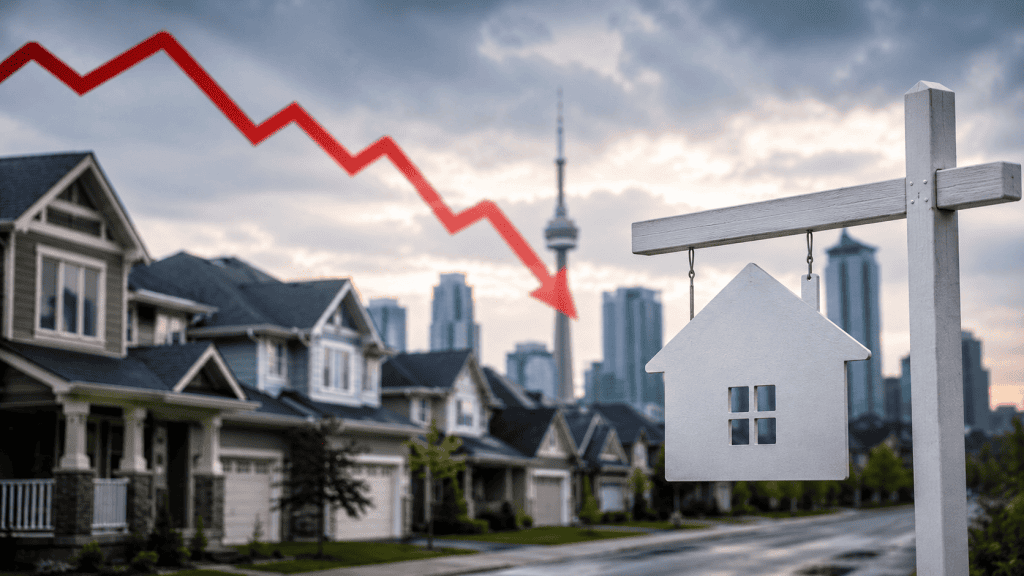
The Canadian housing market has experienced a noticeable slowdown in home sales over the past year. After the record-breaking activity seen during the pandemic years, the market is now adjusting to changing economic conditions, higher borrowing costs, and shifting buyer behavior.
While Canada’s real estate market remains one of the world’s most resilient, fewer transactions are taking place in many provinces, particularly in Ontario and British Columbia. This slowdown doesn’t necessarily indicate a housing crash—instead, it reflects a market returning to more balanced conditions.
In this article, we’ll explore the main reasons why home sales are slowing in Canada, how different regions are performing, and what buyers, sellers, and investors should expect moving forward.
Why Are Home Sales Slowing in Canada?
Several economic and market factors are contributing to slower home sales.
1. Higher Mortgage Rates Reduce Affordability
One of the biggest reasons behind slower home sales is the cost of borrowing.
Even though interest rates have stabilized compared to previous years, mortgage payments remain significantly higher than they were during the low-rate environment of 2020–2022.
Higher monthly payments mean:
- Buyers qualify for smaller mortgages
- First-time buyers delay purchasing
- Existing homeowners postpone upgrading
- Investor demand weakens
Many Canadians are choosing to wait until borrowing costs improve before entering the market. CMHC continues to identify borrowing costs as a key factor limiting housing demand.
2. Economic Uncertainty
Economic uncertainty affects consumer confidence.
Canadians remain cautious because of:
- Slower economic growth
- Inflation concerns
- Employment uncertainty in some industries
- Trade uncertainty
- Global geopolitical risks
When households become uncertain about the economy, buying a home—often the largest financial decision they make—is frequently delayed. CMHC’s 2026 outlook notes that economic uncertainty is expected to keep housing activity subdued.
3. Home Prices Are Still High
Although prices have cooled in many cities, homes remain expensive relative to household incomes.
Major markets like:
- Toronto
- Vancouver
- Victoria
continue to present affordability challenges despite recent price adjustments.
Many buyers simply cannot afford today’s prices while also managing higher mortgage payments.
4. Slower Population Growth
Canada’s rapid population growth had been a major driver of housing demand in recent years.
However, slower population growth compared with previous years has reduced the number of potential homebuyers entering the market. CMHC cites slower population growth as one of the factors weighing on home sales in 2026.
5. Buyers Have More Choices
During the pandemic housing boom:
- Inventory was extremely limited
- Homes sold within days
- Multiple offers became common
Today, inventory has increased in many markets.
This means buyers can:
- Compare more properties
- Negotiate prices
- Include inspection conditions
- Take more time before making offers
The urgency has largely disappeared.
6. Investor Activity Has Declined
Investors played a significant role during Canada’s housing boom.
Today many investors face:
- Higher financing costs
- Lower profit margins
- Slower appreciation
- Increased holding expenses
As a result, speculative buying has cooled, contributing to fewer overall transactions.
Regional Differences Across Canada
The slowdown is not affecting every province equally.
Ontario
Ontario remains one of the slowest housing markets.
Factors include:
- High home prices
- Large condominium inventory
- Reduced investor demand
- Affordability challenges
Toronto continues to experience slower sales compared to long-term averages.
British Columbia
British Columbia also continues to see weaker activity due to:
- Expensive housing
- Higher borrowing costs
- Reduced foreign investment
- Buyer caution
Alberta
Cities like Calgary remain comparatively stronger because of:
- Better affordability
- Population migration
- Employment growth
- Stronger local economies
Quebec
Montreal has shown relatively stable activity compared with Ontario and British Columbia, supported by stronger local demand.
Is Canada Heading Toward a Housing Crash?
A slowdown in home sales does not automatically mean a housing crash.
Instead, most analysts describe today’s market as a normalization after years of exceptional growth.
Current trends include:
- More balanced inventory
- Moderate price adjustments
- Longer selling times
- Improved negotiating power for buyers
Most forecasts expect gradual recovery rather than a sudden collapse, although regional conditions vary.
What This Means for Buyers
For buyers, slower home sales create opportunities.
Benefits include:
- Less competition
- More listings
- Greater negotiating power
- Better chance of home inspections
- More time to compare properties
First-time buyers may find the market less stressful than during the bidding wars of previous years.
What This Means for Sellers
Sellers need realistic expectations.
Success today often requires:
- Competitive pricing
- Professional staging
- High-quality photography
- Flexible negotiations
- Patience
Homes that are priced correctly continue to sell, while overpriced listings often remain on the market longer.
Tips for Real Estate Investors
Investors should focus on:
- Long-term appreciation
- Cash-flow-positive properties
- Strong rental markets
- Population growth areas
- Infrastructure development
Rather than expecting rapid appreciation, today’s market rewards careful property selection and disciplined investing.
Will Home Sales Recover?
Most housing experts expect sales to improve gradually over the next few years if:
- Mortgage affordability improves
- Economic confidence strengthens
- Employment remains stable
- Inflation stays under control
However, recovery is expected to vary by region, with some markets rebounding faster than others.
Canada’s slower home sales reflect a market adapting to higher borrowing costs, affordability challenges, and broader economic uncertainty. While activity has cooled from the extraordinary pace of recent years, this transition is creating a more balanced environment where buyers have greater choice and sellers need realistic pricing strategies.
For buyers, this may be one of the better opportunities in recent years to enter the market with less competition. For sellers and investors, success will depend on understanding local market conditions, pricing accurately, and taking a long-term view of Canada’s real estate landscape.